

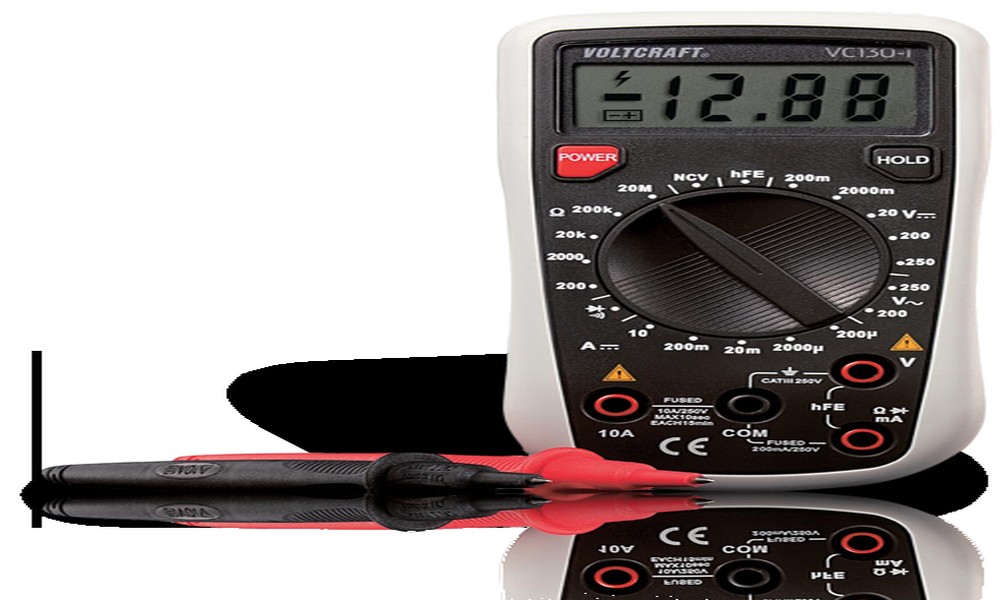
Title: Voltcraft Measurement Equipment: A Guide for Hobbyists and Professionals
Description: Practical information on Voltcraft multimeters, power supplies, and test equipment – setup, calibration, and where to find specific model documentation.
Link: https://manualmachine.com/voltcraft/
Anchor: url – “manualmachine.com/voltcraft”
Voltcraft has established itself as a go-to brand for test and measurement equipment across a wide range of use cases, from hobbyist electronics benches to professional service workshops. Multimeters, bench power supplies, soldering stations, oscilloscopes, signal generators, and environmental measurement instruments all appear in the Voltcraft catalog, and many of them offer a combination of capability and price that keeps them popular for decades after the original purchase. For users of Voltcraft equipment, documentation is more important than for general consumer products because measurement instruments have specific calibration procedures, safety categories, and operational limits that directly affect the accuracy and safety of the work being done. This guide covers what Voltcraft users should know in 2026 and where to find the right documentation for specific models.
Safety Categories: What the CAT Rating Actually Means
Every Voltcraft multimeter and many other Voltcraft instruments are rated with a measurement category – CAT I, CAT II, CAT III, or CAT IV – that indicates the kind of electrical environment the instrument is designed to safely operate in. These ratings are not marketing numbers; they reflect genuine design differences in the insulation, input protection, and internal safety barriers of the instrument. Using a CAT II meter to measure a CAT III circuit is genuinely dangerous, and the manual for each instrument specifies the exact category ratings for different measurement functions. Users who understand these ratings work safely; users who do not sometimes discover the limits the hard way. The manual’s safety section is not boilerplate for measurement equipment – it is operationally essential.
Setup and First-Use Calibration
Voltcraft bench equipment, particularly power supplies and signal generators, often requires an initial calibration or self-test procedure before the first use. The manual covers this in detail, along with the environmental conditions under which the instrument’s stated accuracy is valid – temperature range, humidity range, and warm-up time requirements. An oscilloscope used fifteen minutes after power-on may not meet its specified bandwidth until after the stated warm-up period has elapsed. Users who skip these considerations sometimes blame the instrument for accuracy problems that are actually environmental or procedural. The manual explains the conditions clearly, and reading this section once prevents a class of confusion that otherwise recurs every time measurement results seem off.
Understanding Accuracy Specifications
Voltcraft manuals specify measurement accuracy using standard notation that can be confusing on first encounter. A specification like 0.5 percent plus 3 digits means the accuracy is 0.5 percent of the reading plus three counts of the least significant digit on the display, and at different ranges this produces different absolute accuracy values. For precision work, this calculation matters – a multimeter that is accurate to the nearest 0.01 volts in one range may only be accurate to 0.1 volts in another. The manual’s specifications table lays out these numbers clearly, and understanding them lets users match the instrument to the precision their work actually requires.
Where to Find Voltcraft Manuals for Specific Models
Voltcraft has a large catalog going back decades, and many of the most popular models are older instruments that remain in active use. Official documentation for current models is available through the manufacturer, but older models often require a different sourcing approach. A dedicated documentation archive like manualmachine.com/voltcraft covers a broad range of Voltcraft instruments including multimeters, bench power supplies, and specialized test equipment from across the brand’s history. For an instrument that is ten or fifteen years old and still working well – which is common for quality Voltcraft equipment – an archive is often the fastest way to locate the original manual along with any supplementary documentation like application notes or calibration procedures.
Battery and Fuse Replacement
Voltcraft multimeters and portable instruments use specific battery and fuse types that are documented in the manual. Fuses in particular matter for safety – replacing an internal fuse with a lower-rated or non-specified part defeats the safety design of the instrument. The manual specifies exact fuse ratings and often part numbers for the correct replacements. For instruments rated for high-energy measurements, using the specified high-break-capacity fuses is not optional; generic fast-blow fuses at the same current rating do not provide equivalent protection. This distinction is explained in the manual and ignored in internet troubleshooting at users’ own risk.
Interfacing with Computers and Data Logging
Many modern Voltcraft instruments support data logging or interface with computers through USB, RS-232, or Bluetooth. The setup procedure for these interfaces is documented in the manual, and the specific software requirements – driver versions, operating system compatibility, application software – can be more restrictive than initial appearances suggest. For users who rely on data logging for long-term measurement work, reviewing the documentation before assuming compatibility saves time. Older Voltcraft instruments sometimes require specific legacy drivers that are not always easy to locate, and the manual is the authoritative source for which software the instrument was designed to work with.
Periodic Calibration Considerations
Measurement instruments drift over time, and precision work eventually requires periodic calibration to manufacturer specifications. The Voltcraft manual for a given instrument indicates the recommended calibration interval and the procedures that can be performed by the user versus those that require a calibration laboratory. For hobbyist work, annual user-verification against a reference is often sufficient. For professional work where measurements are used for decisions with real consequences, a formal calibration cycle at a certified laboratory is appropriate. The manual helps users understand which level of calibration their use case actually requires.
Building a Voltcraft Reference Library
Users who accumulate multiple Voltcraft instruments over the years benefit from building a dedicated documentation library for the full collection. Each manual should be saved as a PDF named with the model number and instrument type, stored in a cloud folder that is accessible from a workbench tablet or phone. When a specific measurement question comes up – what the accuracy spec is at a given range, how to enter a specific measurement mode, which probe is rated for which use – the answer is seconds away rather than requiring a separate search. This is a small discipline that significantly improves the productivity of workshop and test bench work over the years.
– – – – – – – – – –
